
DSC 600C Differential Scanning Calorimeter for Polymer Testing
How TGA Thermogravimetric Analysis Supports Polymer Quality Control and Material Testing
For manufacturers working with polymers, plastics, rubber, cables and composite materials, understanding how a material changes when exposed to heat is essential for both product development and quality control.
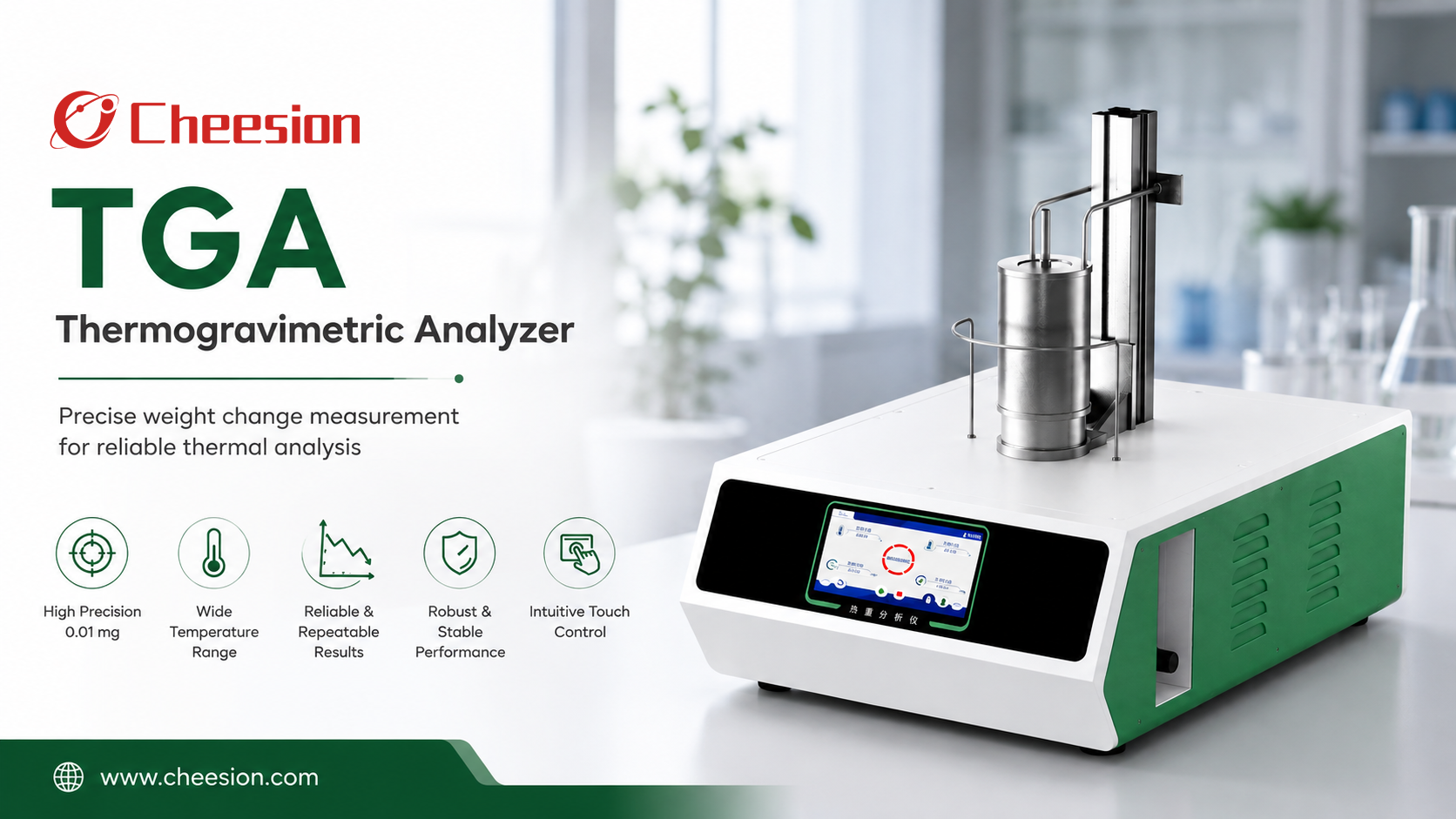
A TGA Thermogravimetric Analyzer measures the change in sample mass as temperature increases, decreases or remains constant under a controlled atmosphere. By recording weight loss at different temperature stages, thermogravimetric analysis can help identify moisture, volatile components, polymer decomposition, carbon black, fillers and residual ash.
This makes TGA especially useful for manufacturers that need to verify incoming raw materials, compare suppliers, investigate production problems and maintain consistent product quality.
Why TGA Is Important for Polymer Testing
Polymer materials often contain multiple components, including base resins, additives, stabilizers, fillers, pigments and reinforcing materials.
These components may decompose or remain as residue at different temperatures. A TGA curve provides a direct view of how the material behaves during heating.
For example, a polymer sample may first lose moisture or volatile substances, followed by decomposition of the polymer matrix. At higher temperatures, inorganic fillers or ash may remain.
This information helps laboratories answer practical questions such as:
· Is the raw material consistent with the approved formulation?
· Does one supplier use more filler than another?
· Is the material thermally stable enough for the intended application?
· Does the sample contain excessive moisture or volatile matter?
· Is the carbon black content consistent between production batches?
For quality control teams, these questions directly affect production reliability and finished-product performance.
Carbon Black Testing in PE Pipes and Cable Materials
One important TGA application is carbon black content analysis.
Carbon black is commonly added to black polyethylene products because it contributes to UV resistance and long-term outdoor durability. It is therefore widely found in PE pipes, geomembranes, agricultural films and cable sheathing.
A TGA analyzer can separate the thermal decomposition of the polymer from the remaining carbon black and inorganic residue under controlled test conditions.
This allows manufacturers to evaluate whether carbon black levels remain consistent across different batches of raw materials or finished products.
For PE pipe and cable manufacturers, carbon black testing can support:
· Incoming material inspection
· Supplier comparison
· Production batch verification
· Finished-product quality control
· Investigation of material aging or performance problems
This makes TGA a useful tool not only for research laboratories but also for routine industrial inspection.
Measuring Ash and Filler Content
Fillers are widely used in plastics and rubber to modify mechanical properties, reduce cost or improve specific material characteristics.
However, excessive or inconsistent filler levels can affect processing behavior and final product performance.
Thermogravimetric analysis can help determine the proportion of organic and inorganic components by measuring mass loss during controlled heating.
After the polymer portion decomposes, the remaining residue can provide information about ash or inorganic filler content.
This application is particularly valuable for manufacturers that need to compare raw materials from different suppliers or verify whether a production batch matches an approved formulation.
Evaluating Thermal Stability and Decomposition
Another major use of a TGA Analyzer is thermal stability testing.
Every polymer has a characteristic decomposition behavior. TGA allows users to observe the temperature range in which significant mass loss begins and how quickly decomposition occurs.
This information can support material selection and processing decisions in industries such as plastics, automotive components, electronics, cables and advanced materials.
For example, when two polymer formulations are being compared, the material showing improved thermal stability may be better suited for applications involving elevated temperatures.
TGA can also help R&D teams evaluate the effect of additives, stabilizers or formulation changes on thermal performance.
Moisture and Volatile Content Analysis
Moisture and low-molecular-weight volatile components can influence polymer processing, storage stability and product consistency.
During a TGA test, these materials may be detected as early-stage mass loss before the primary polymer decomposition begins.
This makes TGA useful for checking moisture-sensitive raw materials and investigating unexpected production behavior.
In laboratories, thermogravimetric analysis can also support comparative studies of different batches, formulations or storage conditions.
TGA for Incoming Material Inspection and Supplier Verification
Many manufacturing problems begin with inconsistent raw materials.
A resin, compound or filled polymer may appear visually identical while having a significantly different composition.
TGA provides manufacturers with a method to compare the thermal decomposition profile and residual mass of different material batches.
Quality departments can therefore use TGA as part of incoming inspection to verify supplier consistency before materials enter production.
This approach can help reduce material mix-ups, identify formulation differences and improve traceability.
Choosing a TGA Analyzer for Industrial Testing
When selecting a thermogravimetric analyzer, laboratories should consider the required temperature range, atmosphere control, heating program, balance sensitivity, software functions and sample types.
The CHEESION TGA Thermogravimetric Analyzer is designed for applications including polymer decomposition analysis, thermal stability testing, carbon black determination, ash analysis, filler evaluation, moisture measurement and volatile content analysis.
It is suitable for universities, research institutes, third-party laboratories and industrial quality control departments working with plastics, rubber, polymers, cables, pipes, composites and advanced materials.
For manufacturers, TGA is more than a research instrument. It can become a practical quality control tool for understanding raw materials, monitoring production and improving confidence in finished products.
Need to evaluate carbon black, ash, fillers or thermal stability in your materials? Contact CHEESION to discuss your TGA testing requirements.